The carnivore diet has one of the shortest grocery lists in nutrition. It is also the one people mess up most, because the store is built to tempt you. You go in for ground beef and come out with a rotisserie chicken, a “keto” snack bar, and a candle.
Here is a list you can take to the store, along with the logic behind it, so you can improvise when the butcher has a sale.
Start at the Meat Counter
Most of your cart lives here, so build it in tiers.
Everyday staples are the cuts you’ll buy on repeat:
- Ground beef, in a fattier blend if you can find one
- Chuck roast or other braising cuts
- Ribeye, strip, or sirloin when the price is right
- Chicken thighs, bone-in and skin-on
- Pork shoulder or ribs
Rotation cuts keep you from eating the same dinner for sixty days straight:
- Lamb shoulder or chops
- Beef short ribs
- Canned sardines or salmon
- Shrimp or whitefish if you want something lighter
Cheap extras are the ones many beginners skip:
- Beef or chicken liver, if you’re curious
- Beef heart, which cooks up like a lean steak
- Soup bones for broth
- Oxtail, for when you want to feel like a Victorian aristocrat
A good rule is to pick two or three staples, one rotation cut, and one wildcard each week. Boredom is the real enemy of this diet, and a wildcard costs less than a takeout order you made in desperation.
Don’t Forget the Fat
Lean meat can leave you hungry and a bit sad. Fat adds flavour and keeps meals satisfying, so it belongs on the list alongside the protein.
Good additions:
- Beef tallow, which is great for searing
- Butter, if you include dairy
- Lard
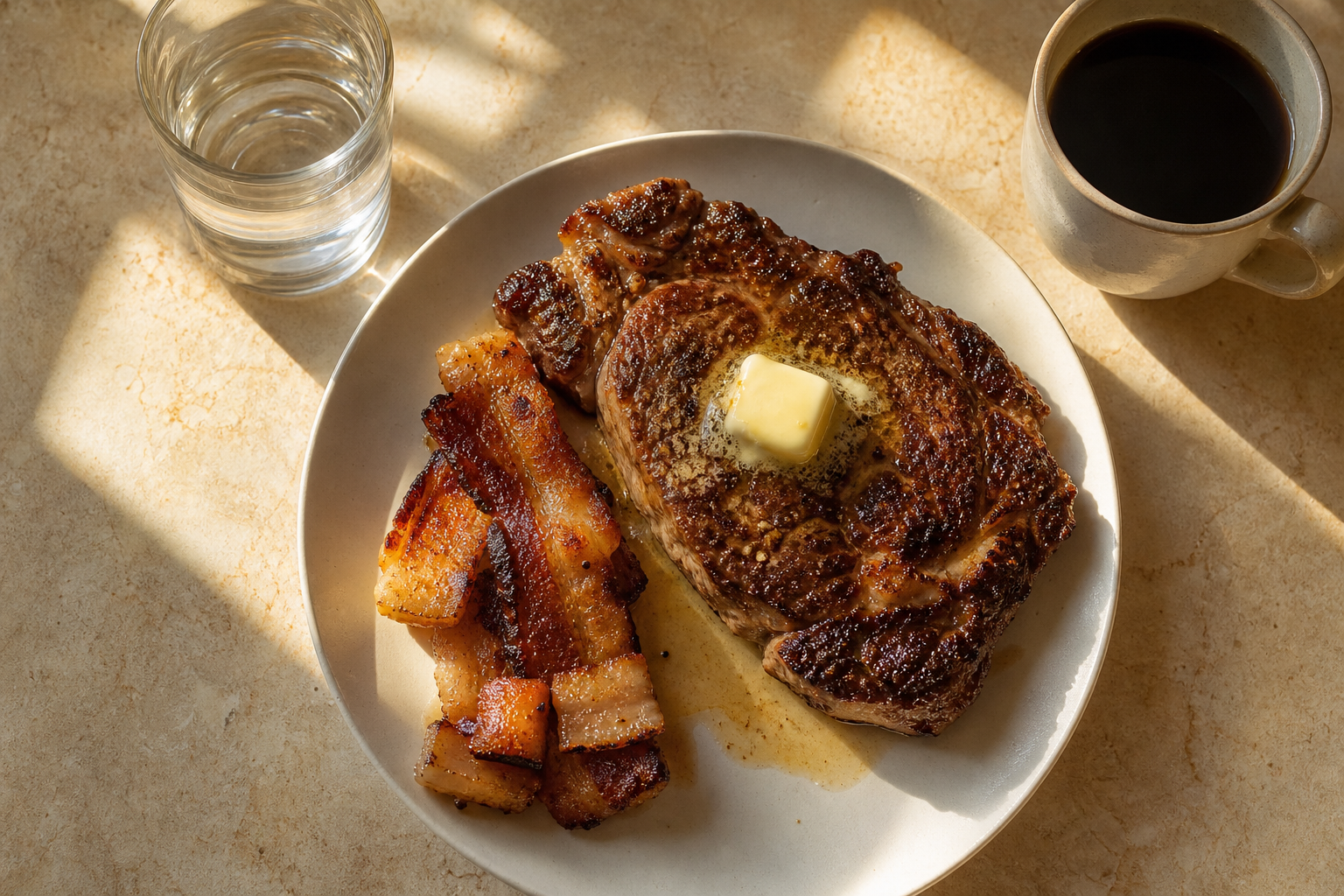
- Fatty cuts like ribeye, short rib, and pork belly
- Suet or trimmings from the butcher, often free or very cheap if you ask nicely
If you eat a lot of chicken breast, you’ll want more of this category. Fat is how a dry chicken breast becomes something you’d serve to guests.
Ask the butcher for trimmings. Butchers tend to like customers who want the parts everyone else ignores, and you may leave with a bag of fat for a few dollars.
Eggs and Dairy (If They Work for You)
Many people who follow this way of eating include eggs, and some include dairy. Others don’t. Treat this section as optional and decide based on your own approach and how you feel.
If you’re including them:
- A dozen or two eggs, which are cheap, quick, and forgiving
- Butter or ghee
- Hard cheeses, which are low in lactose
- Heavy cream, if you want it in your coffee
If you’re stricter, skip the whole section and spend the money on another cut of beef. Nobody is checking your cart except the person behind you, who is wondering why you have forty pounds of meat.
The Pantry: Short and Boring
This is the shortest section, and it should stay that way.
- Salt, in whatever form you like
- Water, plus sparkling water if you want bubbles
- Black pepper, if your approach allows it
- Coffee or tea, if you drink them
Pantry shelves are where people drift, so check labels. “Natural flavours,” sugar, and starches hide in places you wouldn’t expect. Seasoning blends, deli meats, and pre-marinated cuts are the usual culprits. A plain cut of meat has one ingredient: meat. If the package has a paragraph on it, put it back.
Bacon and sausage are worth a quick look at the ingredients. Some have added sugar or fillers, and some are clean. Find one you like and buy that one every time.
Build a Weekly Cart That Won’t Fall Apart
Here is a sample week for one adult. Adjust it to your appetite, because “one adult” covers a lot of ground.
- 3 to 4 pounds of ground beef
- 2 steaks, whichever cut is on sale
- A package of chicken thighs
- A pork shoulder or a rack of ribs
- One rotation item, such as lamb or salmon
- A dozen eggs, if you eat them
- A tub of tallow or a stick or two of butter
- Salt, if you’re running low
Not sure how much you actually need? Plug your numbers into the free Carnivore Macro Calculator and work backward from your protein and fat targets to a pounds-of-meat figure. That beats guessing at the counter and discovering on Thursday that you’re out of food.
A few shopping habits will help:
- Shop the perimeter, then stop. The meat counter is on the edge of the store. The middle aisles are where your willpower goes to die.
- Buy in bulk when it’s on sale. Family packs are usually cheaper per pound. Portion them at home, freeze them flat, and thaw what you need.
- Make friends with the butcher. They know when the good stuff arrives and what’s marked down.
- Eat before you shop. A hungry shopper with a cart is a dangerous combination.
- Plan two or three meals, not twenty-one. You will eat a lot of the same things, and that’s fine. Variety comes from cooking method and rotation cuts, not from a thick recipe binder.
The Short Version
Your carnivore grocery list is meat, fat, and salt, with eggs and dairy as options. Choose a couple of staples, rotate in something different, ask the butcher for the cheap fatty bits, and read labels on anything processed. The produce aisle will be fine without you.
Print the list, stick it on the fridge, and walk past the candles.