Breakfast is easy: eggs and bacon, done. Lunch is leftovers. Dinner is where carnivore dieters stare into the fridge at 6:30 p.m., wondering whether “steak again” counts as a personality.
It does not have to be boring. Here are ten dinners that stay carnivore, need little skill, and rotate often enough that your family stops asking whether you’ve joined a cult.
Why Dinner Gets Repetitive (and How to Fix It)
Most people fall into a rut because they change the protein but never the method. Three ribeyes in a row, all pan-seared, is one dinner eaten three times.
Change the cut, the animal, or the cooking method, and the same meal feels new. Slow-cooked beef and seared beef are different experiences. If you want a refresher on methods, our post on how to cook meat on the carnivore diet covers six of them, and the ideas below borrow from that playbook.
A simple rule: pick one fatty cut, one cooking method, and one “extra” such as eggs or a pat of butter. That’s dinner.
Five Beef Dinners Worth Repeating
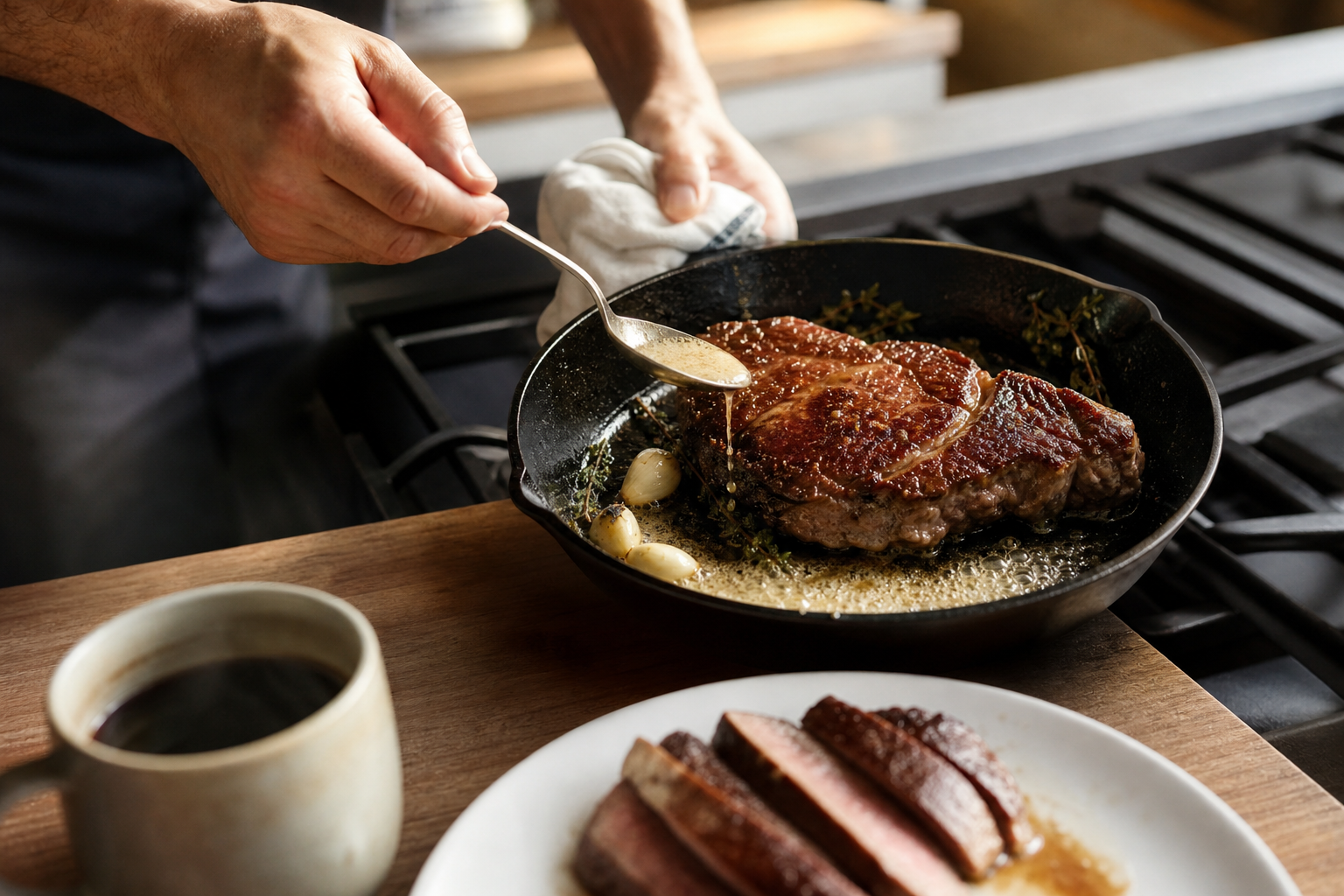
1. Butter-basted ribeye. Sear in a hot cast iron pan, drop the heat, add butter (if you do dairy), and spoon it over the steak for the last minute or two. It looks like you tried. You didn’t, much.
2. Bunless smash burgers. Ball up ground beef, smash it flat on a screaming-hot skillet, and salt it hard. The edges go crispy and lacy. Stack two or three patties and call it a “double,” because it is.
3. Slow-cooked chuck roast. Salt it, put it in a slow cooker or low oven, and walk away. Hours later you have fork-tender beef swimming in its own juices, which you pour over everything. This is the best return on effort in carnivore cooking.
4. Beef short ribs. Braise them low and slow. They are rich enough that you’ll stop at a smaller portion than you expected, which is a nice change for people who usually eat until the plate is empty.
5. Meatballs. Ground beef, salt, and an egg to bind. Bake a big tray and you have dinner tonight and lunch tomorrow. If you want a blend that browns well, check our guide to ground beef blends.
Five Dinners That Aren’t Beef
Variety is not just for boredom’s sake. Different animals bring different fats and flavors, and your wallet may appreciate the change too.
6. Lamb chops. They cook in minutes, and the fat cap crisps up like bacon’s classier cousin. A little salt is plenty.
7. Skin-on salmon. Start it skin-side down in a pan and leave it alone until the skin turns crackly. Fish is a quick dinner when you’re short on time, and the skin is the best part.
8. Sheet-pan chicken thighs. Skin-on, bone-in thighs, salted, roasted until the skin shatters. One pan, no babysitting. Skip the lean breast, which turns to sawdust without a sauce.
9. Pork chops with a fat edge. Buy them thick and bone-in, and sear the fat cap first by standing the chop on its edge. It’s a trick that works, and it makes you feel like a professional.
10. Shrimp in butter or tallow. Five minutes, one pan. Shrimp is the “I forgot to plan dinner” hero. Keep a bag in the freezer.
Low-Effort Dinners for Tired Nights
Some evenings you have the energy of a houseplant. For those:
- Eggs and ground beef skillet. Brown the beef, push it aside, scramble eggs in the same pan. Breakfast-for-dinner is a legitimate genre.
- Leftover roast, reheated gently. A splash of broth keeps it from drying out.
- Canned fish with a side of eggs. Not glamorous, but it counts, and no one is grading you.
- Thawed burger patties. Keep a stash of pre-formed patties in the freezer. They cook in about ten minutes.
The best dinner is the one you actually eat. Getting takeout-level lazy and eating a pan of plain beef still beats grabbing a sugary snack because you were too tired to cook.
Build the Plate So It Keeps You Full
Dinner tends to go wrong in two ways: too lean (you’re hungry again by 9 p.m.) or too much food too fast. Leaner cuts like sirloin or chicken breast usually need added fat to be satisfying. Fattier cuts like ribeye or short ribs often don’t.
If you’re not sure how much you need, a quick check helps. The free Carnivore Macro Calculator gives you a starting point for protein and fat, and you can work out how many ounces of your usual dinner fit that target. It beats guessing, and it beats the “eat until you’re numb” method.
Also think about timing. If you tend to snack at night, a heartier, fattier dinner may help more than a “light” one. Pay attention to how you feel, and adjust from there.
A Sample Dinner Week
Here’s a rotation that keeps things interesting without demanding much of you:
- Monday: Butter-basted ribeye
- Tuesday: Smash burgers
- Wednesday: Salmon, skin-on
- Thursday: Chuck roast, slow-cooked on Sunday and reheated
- Friday: Lamb chops
- Saturday: Meatballs, batch-cooked
- Sunday: Chicken thighs on a sheet pan, then start the next roast
Notice the pattern: two cheap, easy dinners, two “treat” dinners, and a couple of batch-cook days. You can swap anything in or out. Seasoning stays simple, mostly salt, and if you want more options, see our post on carnivore spices and seasonings.
Carnivore dinners don’t need a recipe book. They need a good cut, a hot pan or a patient oven, and enough rotation that you don’t hit “meat fatigue” by week three. Pick two ideas from this list for this week, and treat the rest as backup.