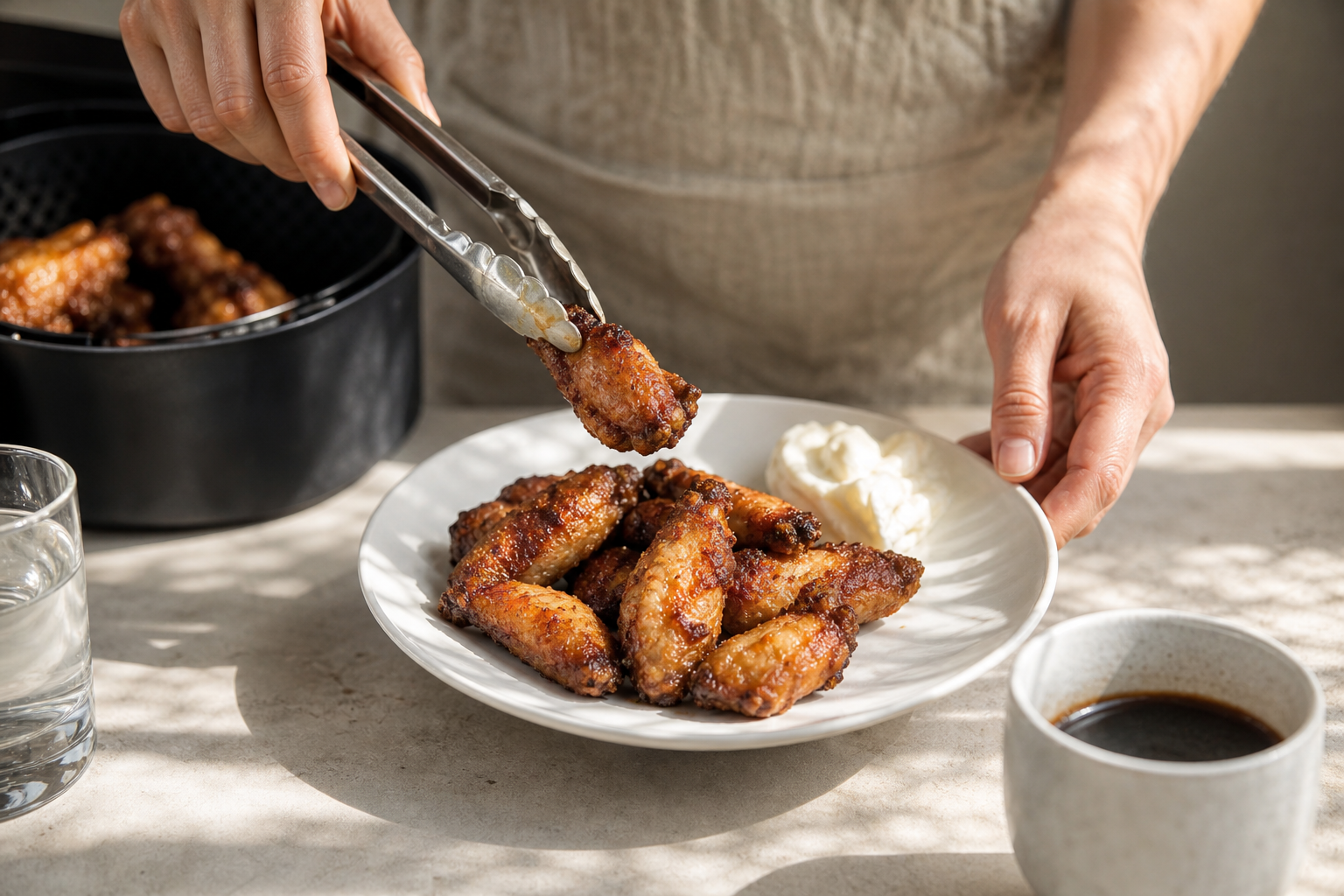
The air fryer is a tiny convection oven with good PR. It’s also one of the best gadgets a carnivore can own. Meat plus hot circulating air equals crisp edges, juicy centers, and almost no cleanup. You can’t say that about the cast iron skillet you’re still scrubbing from Tuesday.
Here are six simple ideas, plus the habits that keep them from turning into smoky, dry disappointments.
Why the Air Fryer Works So Well for Carnivore
Carnivore cooking is mostly about heat and timing, and an air fryer handles both. It preheats in a couple of minutes, cooks fast, and crisps skin and fat without needing a pool of oil. If you’ve already read our guide to cooking meat on the carnivore diet, think of this as one more method, best for smaller, quick-cooking cuts.
The tradeoff is that it can’t handle everything. A whole brisket is not an air fryer project, and a giant roast won’t fit. Think wings, steaks, patties, fish, bacon, and eggs.
The Ground Rules Before You Start
A few habits matter more than any recipe:
- Pat the meat dry. Surface moisture steams instead of crisping. Paper towels are cheap and effective.
- Don’t overcrowd the basket. Air needs room to move. Cook in batches if you have to. Crowded meat steams and turns gray.
- Season with salt and whatever else fits your own rules. Simple works.
- Use a meat thermometer. Air fryers vary a lot, and the times below are starting points. Safe internal temperatures are 165°F for poultry, 160°F for ground beef, and 145°F for steaks and fish (with a short rest for steaks).
- Flip halfway. Most baskets heat unevenly.
Recipe Ideas, Part One: The Crispy Stuff
1. Bacon. Lay strips in a single layer and cook at around 375 to 400°F for 8 to 12 minutes, checking early. Thin bacon burns fast, and thick-cut forgives you more. Bacon drips a lot of fat, which can smoke. Some people add a splash of water to the bottom of the drawer to help. Drain the fat afterward and save it, since it’s a cooking fat. (Check our post on bacon and processed meat for what to look for on the label.)
2. Chicken wings. Dry them thoroughly, salt them, and cook at about 400°F for 20 to 25 minutes, flipping halfway. Check that they’ve reached 165°F. The skin comes out crackly in a way that oven wings only achieve after an hour of effort and some muttering. Bone-in thighs work the same way, though they need closer to 25 to 30 minutes.
3. Hard-boiled eggs. This one feels like a prank, but it works. Set whole eggs in the basket at roughly 250 to 270°F for about 15 minutes, then move them to an ice bath. No pot of boiling water, no watching a timer on the stove. Times shift between machines, so test one first and adjust.
Recipe Ideas, Part Two: The Main Events
4. Steak. Pick a cut about an inch thick, such as ribeye or strip. Let it sit out briefly, dry it, salt it, and cook at about 400°F for 8 to 12 minutes, flipping once. Rest it for five minutes before slicing. You won’t get the deep sear of a cast iron pan, but you get a good crust and a lot less splatter. Thick filets and very thin steaks are trickier, so lean on the thermometer. If you’re deciding what to buy, our post on the best steak cuts has you covered.
5. Burgers. Form patties without any filler, since it’s just beef and salt. Press a small dimple in the center so they don’t puff up like little meat hockey pucks. Cook at 375 to 400°F for 8 to 12 minutes, depending on thickness, until they reach 160°F. A fattier blend like 80/20 stays juicy, while lean beef dries out fast in moving air. Fat will drip out, which is fine, but it also means the patty ends up leaner than the label suggests.
6. Salmon. Season a fillet and cook it at around 390°F for 7 to 10 minutes, until it reaches 145°F. Skin-on is easier, since the skin crisps and protects the flesh. Salmon cooks quickly, so check it early. Overcooked salmon in an air fryer tastes like punishment. For more fish options, see our seafood guide.
Common Mistakes (and One Macro Note)
Too lean, too dry. Air fryers are hard on lean cuts. If your chicken breast comes out like a chalkboard eraser, switch to thighs, wings, or a fattier cut. Or brush on a little tallow or butter.
Skipping the preheat. Two minutes of preheating makes a real difference to browning.
Never cleaning the basket. Old grease smokes, and it makes your next batch taste like your last one. Wash it after each use, and wipe the drip tray.
Ignoring the fat that drips away. Here’s the macro note. Air frying drains a good amount of fat out of fatty cuts like bacon and burgers, so what ends up on your plate isn’t exactly what the package says. If you track your intake, check the totals against your goals with the free Carnivore Macro Calculator. If you’re falling short on fat, add some back with butter, tallow, or a fattier cut.
The Bottom Line
An air fryer won’t replace your skillet or grill, but it covers weeknights well. Bacon in ten minutes, wings in twenty, and eggs without a pot of boiling water add up to a lot of easy meals. Start with wings or a burger, learn how your machine runs, and adjust the times from there. Keep a thermometer handy, keep the meat dry, and give everything some room. Your basket and your dinner will both turn out better.