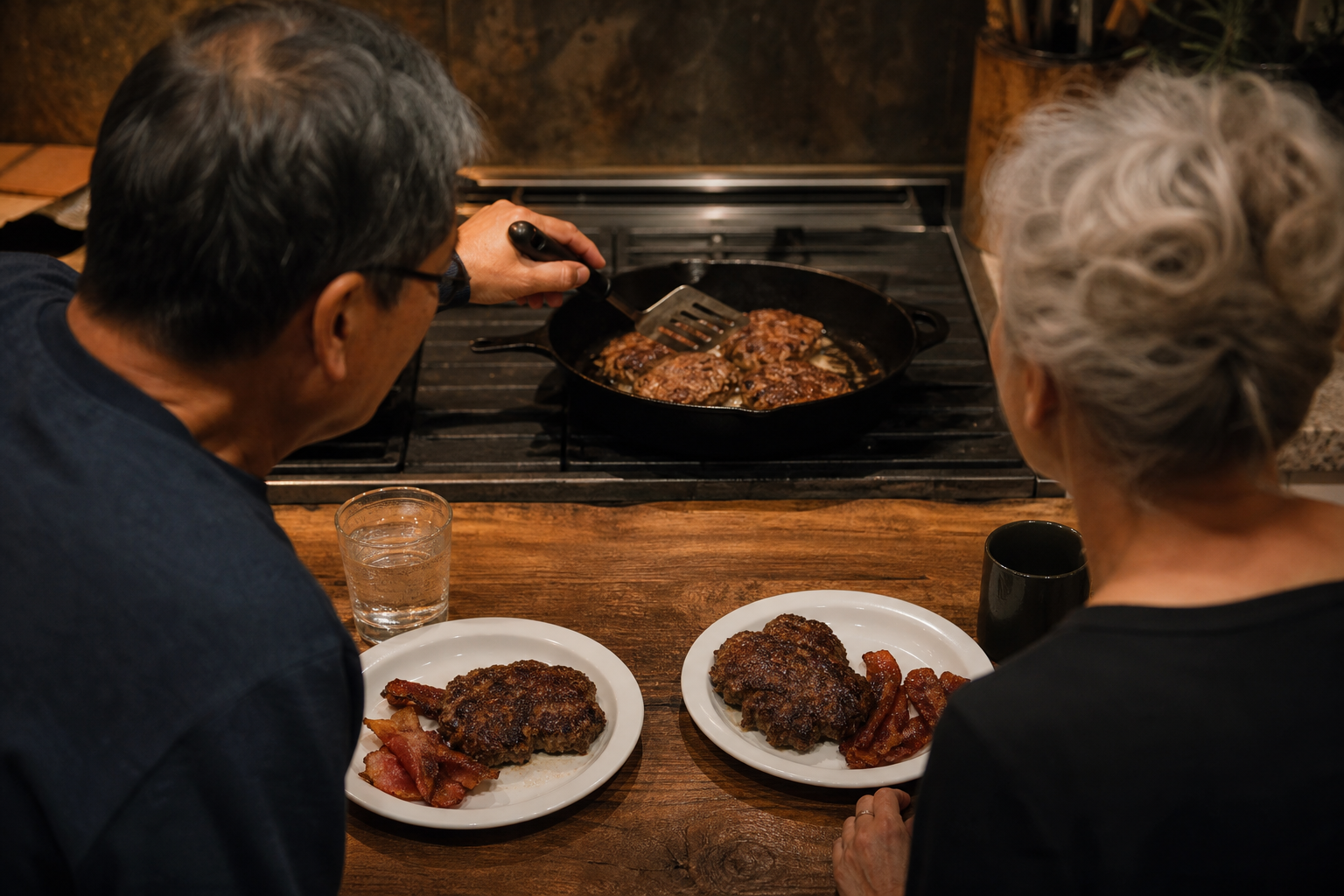
Ground beef is the Honda Civic of the carnivore diet. It isn’t glamorous, nobody brags about it at parties, and it will quietly get you where you’re going for years. It’s affordable, fast, forgiving, and sold in every grocery store on earth.
But the meat case at the supermarket looks like a menu of math problems: 73/27, 80/20, 85/15, 93/7. Pick wrong and you end up with either a greasy puddle or a dry gray hockey puck. Here’s how to choose well.
Why Ground Beef Earns Its Spot
Ground beef solves the three biggest problems new carnivores run into: cost, time, and boredom.
Cost. Ground beef is usually one of the cheapest ways to buy beef. Our budget guide covers cheap cuts more broadly, but if your wallet is crying, ground beef is the first place to look.
Time. A pound of ground beef goes from fridge to plate in about ten minutes. A ribeye needs a little more attention, a little more money, and a little more dignity.
Flexibility. You can form it into patties, meatballs, a meatloaf, a loose skillet scramble, or a giant “burger bowl.” Same meat, five different dinners.
It also makes tracking easy. Fat and protein vary less by the pound with ground beef than with, say, a mystery steak from a restaurant, because the package tells you exactly what you’re getting.
Decoding the Lean-to-Fat Numbers
The two numbers on the package describe the ratio of lean meat to fat by weight. An 80/20 blend is roughly 80% lean and 20% fat. A 90/10 blend is 90% lean and 10% fat.
Two things to know:
- More fat means more calories per ounce. Fat is more energy-dense than protein, so the fattier the blend, the more calories you get in the same weight of meat.
- More fat means less protein per ounce. That’s just simple displacement. If part of the patty is fat, less of it is muscle.
Exact numbers vary by brand and by how the beef was raised, so use the nutrition label on your package rather than a generic chart. Also remember that some fat renders out into the pan when you cook. Whether you drain it or eat it matters for your totals. If you’re leaving it in the pan and spooning it back over your meal, count it.
One more label tip: “ground beef” should list beef and nothing else. Skip anything pre-seasoned or mixed with fillers, which defeats the point of eating plain meat.
Choosing a Blend for Your Goal
There’s no single best blend. It depends on what you’re trying to do and how your body responds.
Fattier blends (73/27 to 80/20): These are the classic carnivore choice. They taste richer, stay juicy, and keep you full if your energy mostly comes from fat. They’re also often the cheapest. If you tend to under-eat on carnivore because lean meat leaves you hungry and flat, this is where to start.
Middle blends (85/15): The compromise child. Enough fat to cook well, noticeably less grease on the plate. A good default if you’re not sure.
Lean blends (90/10 and up): Higher in protein for the same weight, and useful if you’re chasing a protein target or watching calories. They dry out fast, so you’ll need to add fat back. Cooking them in tallow or butter, or topping with an egg, works well.
If you aren’t sure which ratio fits your numbers, the free Carnivore Macro Calculator can help you set protein and fat targets. Then you can match them to a blend. Many people find it easier to pick a calculated target first and shop second, rather than the other way around.
For more on balancing the two, our post on the fat to protein ratio goes deeper. The short version: if you feel hungry an hour after eating, check whether you bought a blend that’s too lean.
Cooking It Without Making Gravel
Most ground beef disasters come from overcooking, overcrowding, or overhandling.
- Use a hot pan and don’t crowd it. Crowded meat steams instead of searing, and you get gray crumbles instead of browned, flavorful ones. Cook in batches if needed.
- Don’t squish it. For burger patties, shape gently. Pressing the meat while it cooks squeezes out juice. The one exception is a smash burger: a quick press right when it hits a very hot pan creates a crispy crust, and it works best with a fattier blend.
- Salt matters. Salt the outside right before cooking. Mixing salt heavily into the meat ahead of time can make the texture dense and sausage-like, which is great for meatballs but less so for a burger.
- Use a thermometer. The USDA recommends cooking ground beef to 160°F (71°C). Unlike a whole steak, grinding mixes surface bacteria throughout the meat, so “medium rare” isn’t the same risk profile. A cheap instant-read thermometer ends the guessing.
- Rest it. Give patties a couple of minutes before eating, so the juices stay in the meat instead of on your plate.
Ways to Eat It Without Getting Bored
Eating the same patty every night is how people quit. A few easy variations:
- Skillet crumble with an egg on top. Brown the beef, push it to the side, fry an egg in the fat. Breakfast and dinner solved.
- Meatballs. Mix ground beef with an egg and salt, roll, and bake or pan-fry. Eggs help bind them, and they keep well in the fridge for meal prep.
- Meatloaf. Same idea, baked in a loaf pan. Slice it cold the next day.
- Burger bowl. A thick patty cooked in butter or tallow, with melted cheese on top if you eat dairy. No bun, no problem.
- Breakfast patties. Form thin patties, season with salt, and freeze them raw with parchment between each. They cook from frozen in minutes.
If you meal prep, our weekly plan post pairs well with this. Ground beef is one of the easiest proteins to batch.
Storage and Safety Basics
Ground beef spoils faster than whole cuts because more of the meat’s surface is exposed to air. Keep it cold, use it within a day or two of purchase unless the package says otherwise, or freeze it. Flattening it into a thin layer in a freezer bag makes it thaw quickly and stack neatly. Thaw it in the fridge rather than on the counter, and wash your hands and surfaces after handling raw meat.
Ground beef isn’t fancy, but it’s reliable, affordable, and endlessly adaptable. Pick a blend that matches your numbers, cook it hot, don’t overdo it, and you’ll have a meal that works almost any night of the week.