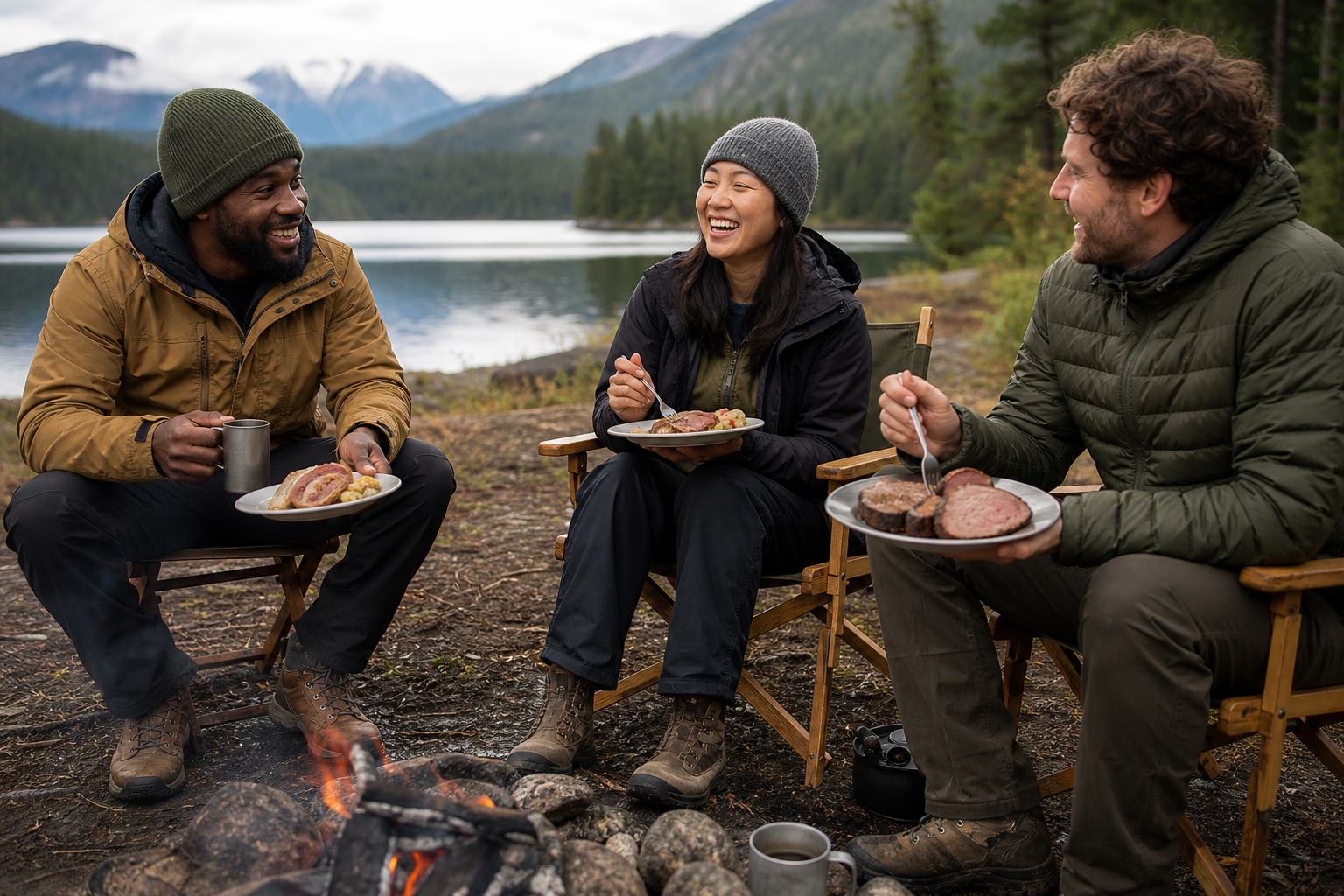
The holidays are a team sport, and your family has been training for it all year. There are casseroles, pies and an aunt who treats “no thanks” as an opening bid. Meanwhile you’re standing there with a fork and a meat-only plan.
The good news is that most holiday tables are built around a giant hunk of animal. You’re not starting from zero. You’re just ignoring about 80% of the buffet. Here’s how to do it without sulking in the corner or starting a debate about seed oils over the gravy boat.
Decide Your Ground Rules Before You Arrive
The worst time to figure out your holiday rules is when someone hands you a warm roll and a look of expectation. Settle it in advance, in the quiet of your own kitchen.
Ask yourself one question: strict or flexible?
- Strict: Meat, animal fats, salt, maybe eggs and butter. Everything else is scenery.
- Flexible: Same base, but you’ve pre-decided on one small exception, like a spoonful of whatever your grandmother makes once a year.
Neither is wrong. What matters is that the decision is made before the mashed potatoes appear. “I’ll just see how I feel” is how people end up face-down in a pie. If you want a deeper look at planned flexibility, our post on cheat days covers the trade-offs.
Also decide how much to explain. Your options range from “I’m good, thanks” to a twenty-minute lecture. Pick the first one. Nobody has ever been converted over appetizers.
Build Your Plate Around the Main Event
Most feasts hand you a centerpiece, and that’s your plate. A few common ones and how they fare:
- Prime rib or roast beef: The gold standard. Salt, a hot oven and patience are all it needs. Go for the end cuts if you like a heavily seared crust, or the center if you prefer pink all the way through.
- Turkey: Perfectly fine. Eat the dark meat and the skin, which carry more fat and flavor, and go easy on the breast unless it’s been basted in plenty of butter or drippings.
- Ham: Read the label or ask. Many holiday hams are glazed with brown sugar, honey or pineapple, and cured with added sweeteners. If it’s glazed, you can often scrape the surface or skip it.
- Roast lamb or leg of pork: Underrated and usually safe. If it’s rubbed with garlic, herbs or a sauce, that’s your call based on your own rules.
- Brisket, ribs and smoked meats: Check the rub and the sauce. A plain salt-and-pepper brisket is a gift. Anything glossy with barbecue sauce is a dessert pretending to be dinner.
Fill your plate with the meat first, then go back for seconds of the same. No one at the table will track your plate like a forensic accountant, though it can feel that way.
Cook Your Own Centerpiece If You’re Hosting
Hosting is the easiest way to control the menu, and the simplest approach is to let the meat carry the meal.
For a prime rib, salt it generously a day ahead and leave it uncovered in the fridge. Roast it low, then sear it hot at the end. Pull it when it’s a few degrees below your target doneness, since it keeps cooking as it rests. Let it sit before carving. This is the hardest part, because it smells like victory and everyone is hovering.
For turkey, pat the skin very dry, salt it, and use butter or tallow instead of oil blends. Save the drippings. Those are your gravy.
Speaking of gravy: most versions are thickened with flour. You can serve plain pan drippings, or reduce them with bone broth until they’re glossy. It’s not a thick gravy, but it’s honest. For more on cooking fats and broth, see our posts on bone broth and cooking fats.
Don’t skip leftovers planning. A big roast means cold sliced beef for days, which is one of the best things about holiday cooking.
Handle the Sides, the Relatives and the Pie
Sides are where plans go to die. You’re surrounded by stuffing, rolls, casseroles and a green bean dish with a crispy topping. None of it needs to be a fight.
A few polite scripts that work in real life:
- “It looks great, I’m full of the main course.”
- “I’m doing a meat-focused thing right now, but I’m loving this roast.”
- “No thanks, but can I get the good end piece?”
Notice the last one pivots toward food. People relax when you’re enthusiastic about something they made. Compliment the cook, ask for the recipe for the meat, and nobody notices what’s absent from your plate.
As for pie, you have options. Decline, sit with a coffee, or bring your own dessert if you eat dairy. A custard made from eggs, cream and a little salt is a fine finish for anyone whose rules allow it. If yours don’t, a second slice of roast is a legitimate dessert and I won’t hear otherwise.
If You’re the Guest, Bring Something
Showing up with your own dish solves most problems. It signals you’re a contributor, not a dietary hazard.
Good things to bring:
- A tray of bacon-wrapped anything, with plain bacon and no sugar cure
- Deviled eggs without the sweet relish, using salt and maybe a little mayo if you eat it
- A pan of meatballs made with ground beef, egg and salt
- A platter of cold sliced roast beef
- Jerky or sausages with clean ingredient lists, checked carefully
Keep a backup plan too. Eat something satisfying before you go, because walking into a feast hungry is like grocery shopping at the same state. You’ll make choices you narrate later with regret.
If you want a sense of how much to eat so you’re not wildly over or under, the free Carnivore Macro Calculator can set a rough daily protein and fat target. That way a big feast day doesn’t turn into guesswork, and you can see how a plate of prime rib fits in.
Get Back on Track Without the Drama
The day after a feast isn’t a punishment, and you don’t need to fast out of guilt. Go back to your normal routine: a couple of eggs, a steak or ground beef, plenty of water and salt.
If you strayed, notice it, shrug, and move on. One meal doesn’t erase your progress, and treating it like a disaster tends to cause more trouble than the meal itself. If you’re feeling off after a heavy meal, simple food and hydration are usually the right reset. Anything persistent or worrying is a question for your doctor, not a blog.
And take the leftovers seriously. Cold roast beef, turkey skin crisped in a pan and a pot of bone broth from the carcass will carry you for days. The feast ends, but the meat doesn’t, and that’s the real holiday gift.