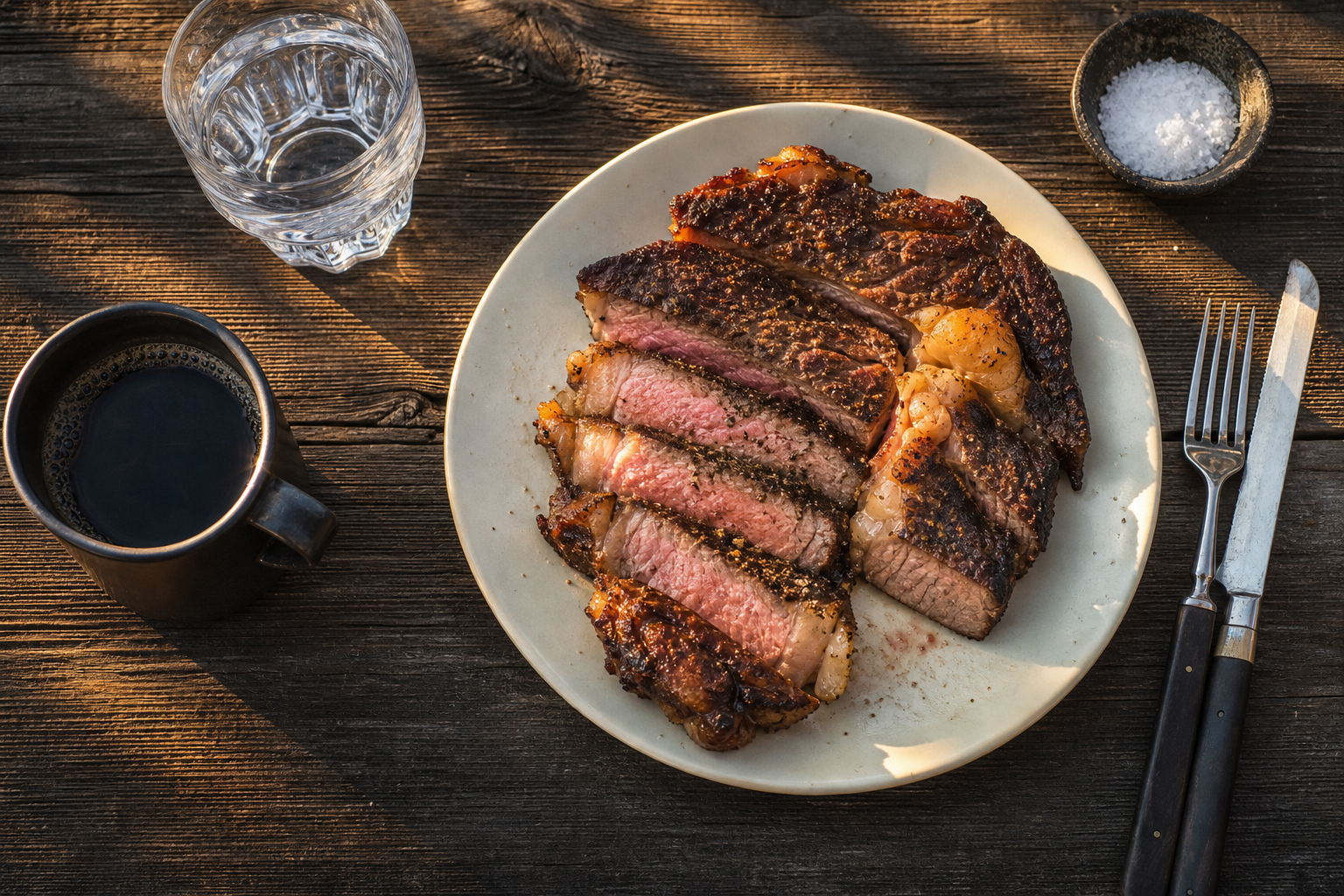
Every carnivore eventually stands in the kitchen, staring at a pan, and asks the big question: what am I supposed to cook this in? Olive oil is out, canola is out, and that cooking spray with the suspiciously long ingredient list is definitely out.
The good news is that animal fats are cheap, tasty, and work very well in a hot pan. Here’s how the main options compare and how to choose among them.
Why Your Cooking Fat Matters More Than You Think
Fat is a big part of how you eat on this diet. Fat has about 9 calories per gram, compared with about 4 for protein, so a couple of tablespoons in the pan add up quickly. If you’re tracking intake, the fat you cook with counts, even though it never shows up on the plate as its own item.
Fat also decides whether your steak tastes like a steakhouse or a gym sock. The right fat gives you a crust, carries flavor, and keeps food from welding itself to the pan. The wrong one fills your kitchen with smoke and sets off the alarm just as dinner is ready.
Two things to weigh when choosing:
- Smoke point: the temperature where fat starts to burn and smoke. Searing needs a higher one.
- Flavor: some fats stay neutral, and some announce themselves.
The Main Contenders
Beef tallow. This is rendered beef fat, and it’s the carnivore workhorse. It has a high smoke point (commonly cited around 400°F), a mild beefy flavor, and it’s solid at room temperature, so it keeps well. It’s great for searing steaks, frying burgers, and crisping up leftovers. Many butchers will sell you suet or trimmings for very little, and some give them away.
Butter. Butter tastes fantastic, but the milk solids burn at a lower temperature (roughly 350°F). That makes it better for gentle cooking, basting at the end, or melting over a finished steak. Whether you eat dairy at all depends on your version of the diet. Some people go strict meat-only, and some include butter and cheese. That’s your call.
Ghee. This is butter with the milk solids removed, which raises the smoke point (often cited near 450°F). You get the buttery flavor with less risk of burning. It’s a solid choice if you want butter taste for high-heat cooking and you’re comfortable with dairy-derived fat.
Lard. Rendered pork fat, with a smoke point somewhere around 370°F depending on how it’s processed. It’s mild, good for frying eggs, pork chops, and sausage. Check the label if you buy it from a store, because some shelf-stable lards are hydrogenated and carry added ingredients. Look for the plain, refrigerated kind.
Bacon grease. Free with every breakfast. It has a smoky, salty flavor that goes well with eggs and burgers. It’s less versatile with something delicate like fish, but you already own it. Strain it into a jar and save it.
Duck or chicken fat. Underrated. Duck fat especially is rich and savory, and it makes great crispy-skinned poultry. It’s usually pricier, so use it where the flavor matters.
Matching Fat to the Meal
You don’t need a pantry full of options. A simple setup covers almost everything:
- Searing steak or burgers: tallow or ghee. High heat, great crust.
- Eggs: butter, bacon grease, or lard. Lower heat, more flavor.
- Bacon and sausage: nothing extra. They bring their own fat to the party.
- Fish: butter or ghee, with a quick baste at the end.
- Lean cuts like chicken breast or sirloin: add fat on purpose, since these cuts won’t supply much on their own. Tallow works well here.
- Reheating leftovers: a spoonful of tallow or lard keeps meat from turning to shoe leather.
If your plan includes only one fat, make it tallow. It’s the most forgiving and the most “on theme” for a meat-focused kitchen.
Make Your Own (It’s Easier Than It Sounds)
Rendering tallow is one of those jobs that feels like a project and turns out to be a slow afternoon of mostly waiting. Here’s the basic process:
- Get beef suet (the hard fat around the kidneys) or trimmed fat from your butcher.
- Chop it into small pieces, or ask the butcher to grind it. Smaller pieces render faster.
- Heat it low and slow in a heavy pot or slow cooker until the fat melts and the solid bits turn crisp and brown.
- Strain the liquid through a fine mesh strainer or cheesecloth into a clean jar.
- Let it cool. It will turn creamy white and firm. Store it in the fridge for longer keeping.
Expect your kitchen to smell like a steakhouse for a few hours. Consider this a feature. Those crispy leftover bits, sometimes called cracklings, are a salty snack, and they’ll vanish quickly if you leave them unattended.
Keep Track of the Fat You Cook With
Here’s where cooking fat sneaks up on people. A tablespoon of tallow or butter is roughly 100 to 120 calories, and it’s easy to pour in two or three without noticing. That’s fine if you need the energy, but it can surprise anyone who’s wondering why the scale isn’t moving, or why they feel too full to finish dinner.
If you’re curious how much fat your plate really contains, plug in your meals, including the pan fat, using the free Carnivore Macro Calculator. It’s a quick way to see whether you’re getting the balance you want, instead of guessing.
A few habits keep things sensible:
- Measure fat with a spoon for a week. Eyeballing is how a “splash” becomes a quarter cup.
- Use less on fatty cuts like ribeye or ground beef, which release their own fat as they cook.
- Use more on lean cuts, where the fat makes the meal satisfying.
The Bottom Line
Beef tallow is the all-purpose pick, ghee is the high-heat butter alternative, and lard and bacon grease are great budget workhorses. Choose based on how hot you’re cooking and how much flavor you want, then keep a small spoon handy to see how much you’re really using.
Now go preheat that pan. Crack a window first.