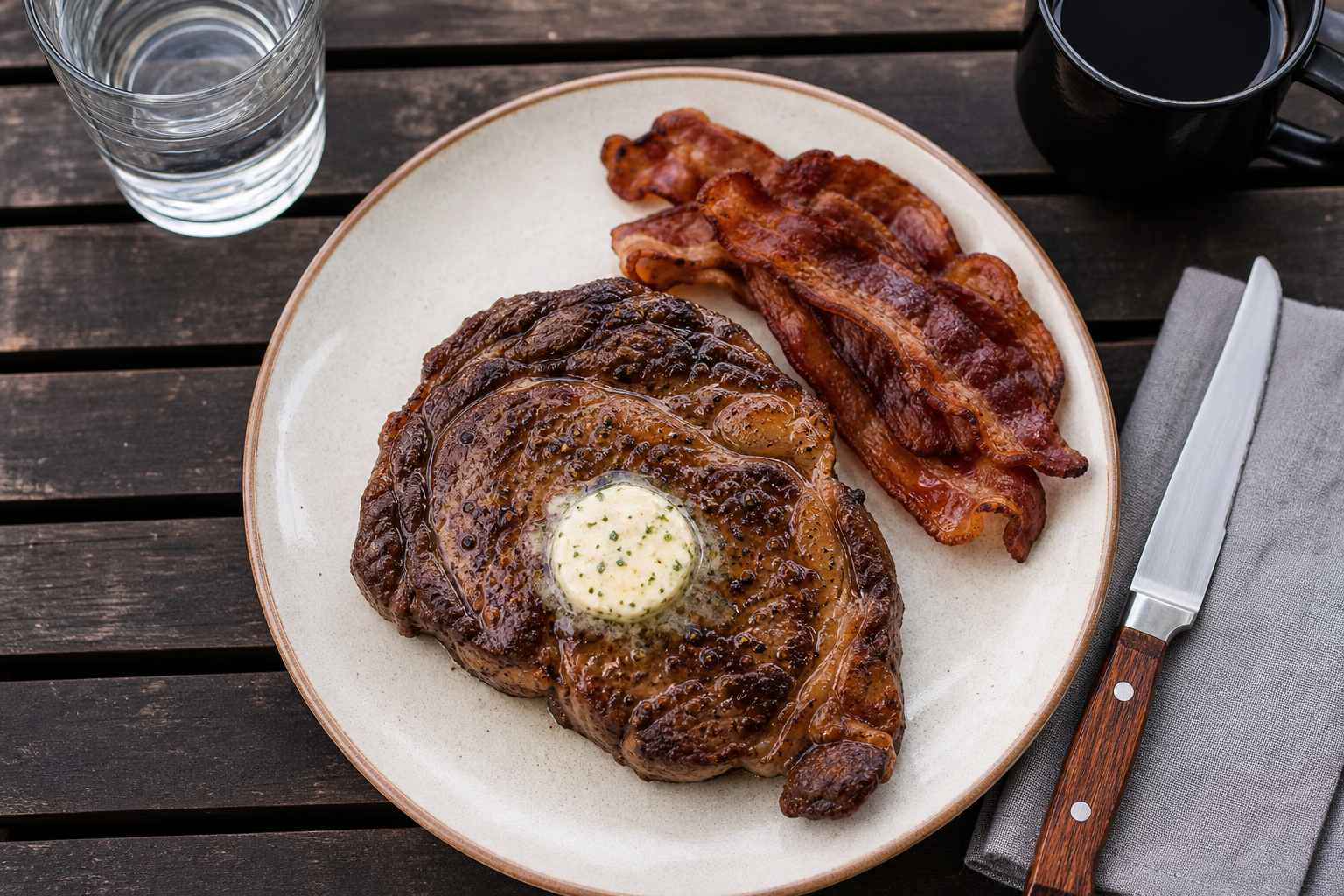
When your diet is meat, water, salt and optimism, your cooking method is the entire personality of the menu. A ribeye seared in a screaming-hot pan and a ribeye boiled until it gives up are technically the same food. They are not the same experience.
Here are six ways to cook meat on the carnivore diet, what each does best, and where each one goes wrong.
Pan-Searing: The Workhorse
If you only learn one method, learn this one. A heavy cast iron or stainless pan, a little fat, and a steak you’ve patted completely dry will get you a deep brown crust in minutes.
A few rules keep it from going sideways:
- Dry the surface. Wet meat steams instead of browning. Paper towels are cheap, and gray steak is sad.
- Salt early or right before. Salt a while ahead and the surface dries slightly, which helps browning. Salt at the last second and you still get flavor. Salt halfway through a panic and you get both regret and uneven seasoning.
- Use a fat that handles heat. Tallow, ghee or beef drippings work well. Our post on best cooking fats for the carnivore diet covers the options in detail.
- Rest the meat. Give it a few minutes before slicing so the juices stay put.
Pan-searing suits steaks, burgers, chops, thin cuts, liver slices and anything under about two inches thick. Thicker cuts tend to burn outside before the middle catches up, which brings us to the next method.
Reverse Searing: For Thick, Expensive Cuts
Reverse searing sounds fancy and is actually lazy-friendly. You cook the meat low and slow in the oven, around 225-275°F, until it’s close to your target doneness. Then you sear it hard in a hot pan for a minute or so per side.
The payoff is an even color from edge to center, with no gray band under the crust. It works best for thick ribeyes, strip steaks, tomahawks and roasts. It’s also forgiving, because the gentle oven gives you a wide window to pull the meat at the right moment.
Buy an instant-read thermometer for this. Guessing doneness on a $40 steak is a form of gambling. For food safety, USDA guidance is 145°F for whole cuts of beef with a short rest, and 160°F for ground meat. Beyond that, doneness is up to you. Some people like steak rare, some like it well done, and plenty of carnivores fall somewhere in between.
Slow Cooking and Braising: Where Cheap Cuts Shine
Tough cuts are full of connective tissue, and a steady, moist, low-temperature cook turns that tissue into something silky. Chuck roast, beef shank, short ribs, pork shoulder, lamb shanks and oxtail all reward patience.
The method is simple:
- Season the meat and brown it in a pan if you have the energy.
- Put it in a slow cooker, Dutch oven or pressure cooker with a splash of water or broth.
- Cook until it shreds under a fork.
The liquid left behind is gold. Pour it over the meat, or save it as a base for broth. If you’re stretching a grocery budget, our guide to carnivore on a budget pairs naturally with this method, since the cheapest cuts become the best dinners.
Slow cooking is also a meal prep dream. One big batch on Sunday becomes lunches for days, and it reheats without drying out the way a lean steak does.
Grilling and Smoking: Flavor Through Fire
Grilling gives you that charred, smoky flavor no pan can quite copy. It’s great for steaks, burgers, ribs, chicken thighs, sausages without added fillers and whole fish.
Two tips:
- Make a hot zone and a cool zone. Sear over the flames, then move the meat to the cooler side to finish. This stops the flare-up that turns dinner into charcoal.
- Trim excess fat sparingly. Fat dripping onto flames causes flare-ups. A little drip is flavor, but a grease fire is a plot twist nobody wanted.
Smoking is the slow-and-low cousin, perfect for brisket, ribs and pork shoulder. It takes hours, so it’s more weekend project than weeknight dinner. Just check rubs and sauces, since many contain sugar. Plain salt works fine.
Air Fryer and Oven Roasting: The Low-Effort Options
The air fryer is basically a small, loud convection oven, and it’s surprisingly good at carnivore staples. Bacon comes out crisp with less mess. Chicken wings and thighs get crackly skin. Meatballs made with just ground beef and salt cook evenly. It’s also handy for reheating leftover steak without turning it into shoe leather.
Oven roasting works the same way for bigger jobs. Whole chickens, pork belly, prime rib and sheet pans of burgers or sausages all do well with a hot oven and not much supervision. If your weeknight energy is low, this is the “put it in, set a timer, ignore it” method.
The weak spot for both is very lean cuts, which dry out quickly. Choose fattier options, or pull them earlier than you think you should.
Tracking Macros When the Meat Changes in the Pan
Cooking changes the weight of meat as water leaves and fat renders. A 10-ounce raw steak does not stay 10 ounces on the plate, which makes tracking confusing if you mix up raw and cooked numbers.
The simplest fix is to pick one and stick with it. Most nutrition databases list raw weights, so weighing meat before cooking is often the cleanest approach. If you cook in batches, weigh the whole batch raw, then divide the cooked result into portions.
Fat is the other variable. Any tallow or butter you add to the pan counts, and any fat left behind in the pan doesn’t. Our free Carnivore Macro Calculator can help you set daily protein and fat targets, so you have a clear number to aim for whichever method you use.
Pick a Method, Then Get Bored on Purpose
You don’t need to master all six. A solid pan-sear, a slow cooker and a decent thermometer will carry most carnivores a long way. The others are there for when you want variety, and on a diet this simple, variety is mostly about how you cook.
Start with a method that matches the cut. Quick and hot for tender steaks, low and slow for tough roasts, and fire for the days when you want to feel like a hunter instead of someone staring at a pan. Do that, and “meat again?” turns into “meat, but differently.”