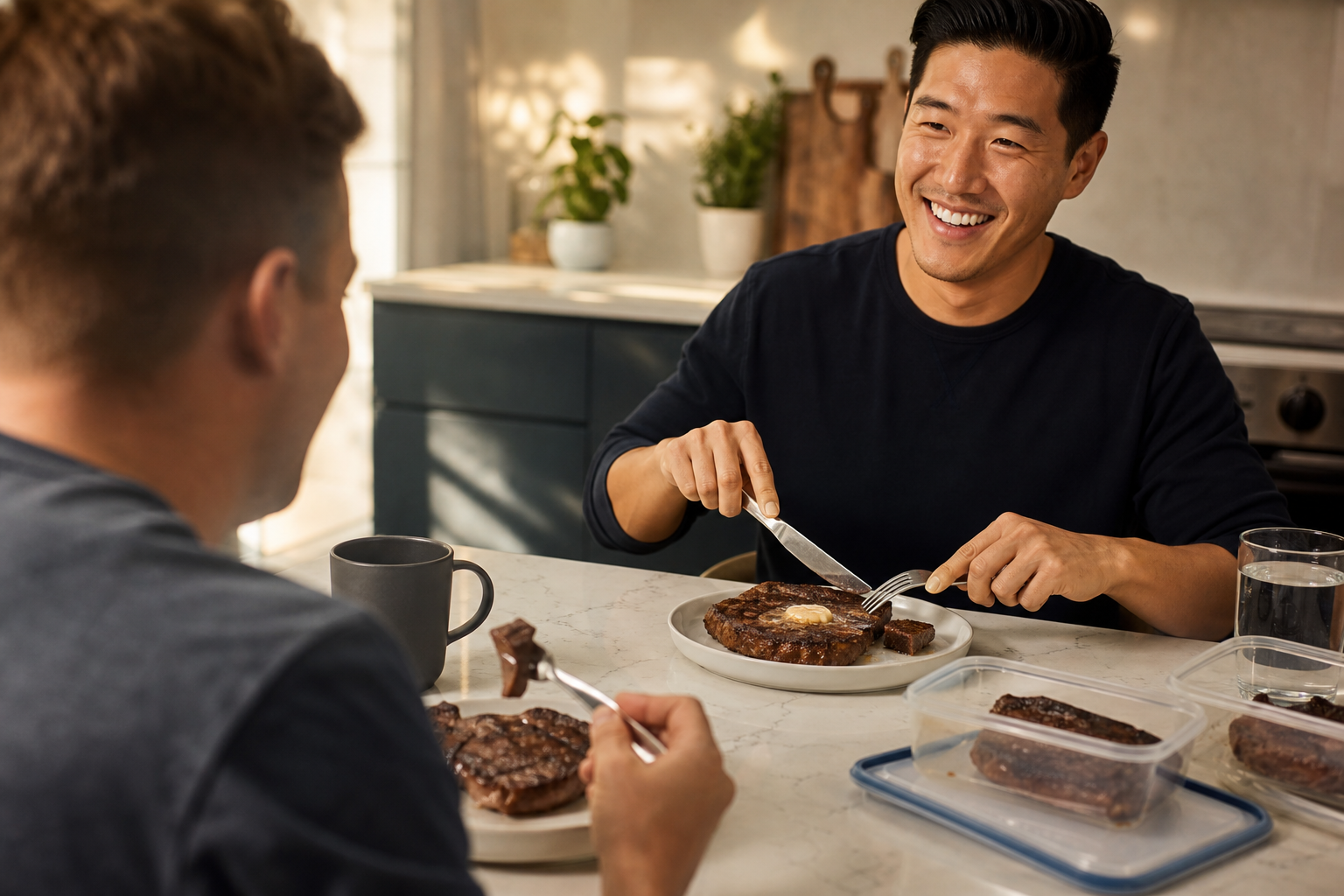
You cleared the carbs, stocked the fridge with ribeyes, and braced yourself for glorious energy. Then 3 a.m. arrives, and you’re wide awake, staring at the ceiling, wondering if a steak can be held responsible for anything.
Sleep changes are one of the most common things people mention when they switch to meat-only eating. Some report sleeping like a hibernating bear. Others get a few weeks of bad nights before things settle. I can’t tell you what’s going on inside your body, and I won’t pretend this is medical advice. What I can do is walk through the usual suspects and the easy adjustments people try.
Why Sleep Can Get Weird at First
Going carnivore is a big change, and your body doesn’t always take big changes quietly. A few things tend to happen around the same time:
- You’re eating very differently. Dropping carbs and sugar changes your fluid and salt balance, your hunger patterns, and your daily rhythm of energy.
- Your routine shifts. New meal times, new cooking habits, and fewer snacks all nudge your body clock.
- You might be eating less than you think. Meat is filling. It’s easy to under-eat without noticing, especially in the first couple of weeks.
Many people describe the early period as a transition phase that evens out. There’s no guaranteed timeline, so treat any “it’ll pass in X days” claim with suspicion. If your sleep is off, though, you’ve probably got a few levers to pull.
The Usual Suspects (Check These First)
1. Salt and electrolytes. When you stop eating processed food and carbs, you often end up with less sodium than before. Some people find that restless nights, cramps, or waking up feeling off go along with low electrolyte intake. If you haven’t looked at this yet, our post on electrolytes, salt, potassium and magnesium is the place to start. Salting your food properly is the cheapest experiment you can run.
2. Caffeine. Carnivores love their coffee, and plenty of people drink it on this diet. But if you’re sleeping badly, the afternoon cup is an easy suspect. Try moving your last coffee earlier in the day, or cut it for a week to see what changes. It’s an unglamorous test, but it’s hard to beat for simplicity.
3. Not eating enough. Hunger can wake you up. If dinner was a single modest burger patty because “I’m not that hungry,” your body may disagree at midnight. Undereating is common in the first weeks of carnivore, when appetite signals are still recalibrating.
4. Eating too much, too late. The opposite problem is real too. A massive tomahawk at 10 p.m. can leave you feeling stuffed and restless. Fat-heavy, protein-heavy meals take a while to digest, and lying down on a full stomach is uncomfortable for most people, carnivore or not.
5. Alcohol. If you’ve kept a nightcap in the routine, notice how you sleep on the nights you skip it. Many people find sleep feels choppier after drinking, and you can compare the nights yourself.
Timing Your Meals Around Bedtime
You don’t need a spreadsheet, but a little structure helps. Here’s a simple framework to test:
- Eat your biggest meal several hours before bed. That gives your stomach time to settle. A common rule of thumb is two to three hours, though your own comfort is the better guide.
- Don’t go to bed hungry. If you’re starving at bedtime, a small snack like a couple of hard-boiled eggs or a few slices of leftover roast is worth trying.
- Keep meal times consistent. Your body likes routine. Eating at wildly different times each day, especially if you’re also experimenting with fasting, can make evenings less predictable.
If you combine meat-only eating with fasting windows, see our guide on carnivore and intermittent fasting. A long fast that pushes dinner late, or leaves you under-fed at night, is a common reason people sleep poorly.
To check that you’re eating enough in the first place, plug your numbers into the free Carnivore Macro Calculator. It’s a handy reality check if you suspect your “I’m just not hungry” days are secretly 1,200-calorie days.
Small Habits That Help Any Eater
Some of the best sleep advice has nothing to do with meat. Before blaming the ribeye, run through the basics:
- Keep the bedroom dark, cool and quiet. Boring, but effective.
- Dim the lights and screens in the last hour before bed. Your phone is not a meat-adjacent hobby, so it needs no special exemption.
- Get some daylight in the morning. Outdoor light early in the day helps many people feel more awake by day and sleepier by night.
- Move during the day. A walk after dinner is easy and tends to make evenings feel calmer. If you’re lifting too, our guide to building muscle on the carnivore diet covers how to fuel it.
- Stay hydrated, but taper off before bed. Drinking a gallon of water at 9 p.m. just buys you a bathroom tour at 2 a.m.
None of this is exotic, and that’s the point. Carnivore doesn’t repeal the ordinary rules of sleep. It just removes a few variables, so it’s easier to spot the ones that remain.
When It Might Not Be the Diet
If you’ve tried the adjustments above for a few weeks and sleep is still rough, step back. Poor sleep has plenty of causes unrelated to what’s on your plate: stress, work schedules, noise, medications, snoring, or other health issues. It’s reasonable to talk to a doctor or other qualified professional, especially if you’re tired during the day, your sleep problems are severe, or you have an existing health condition. Tell them what you’re eating so they have the full picture.
You can also keep a simple log for a week or two: what you ate and when, how much salt and caffeine, bedtime, and how you felt in the morning. Patterns often jump out on paper that you’d never spot in your head at 3 a.m.
The Takeaway
If your sleep went sideways after you went carnivore, don’t panic and don’t blame the steak just yet. Check the boring stuff first: salt, caffeine, whether you’re eating enough, and whether dinner is crowding your bedtime. Change one thing at a time so you know what actually helped.
Give your body a little patience, make sure you’re properly fed, and get the late-night snacking down to a hard-boiled egg rather than a second steak. With any luck, the only thing keeping you up will be wondering what to cook tomorrow.