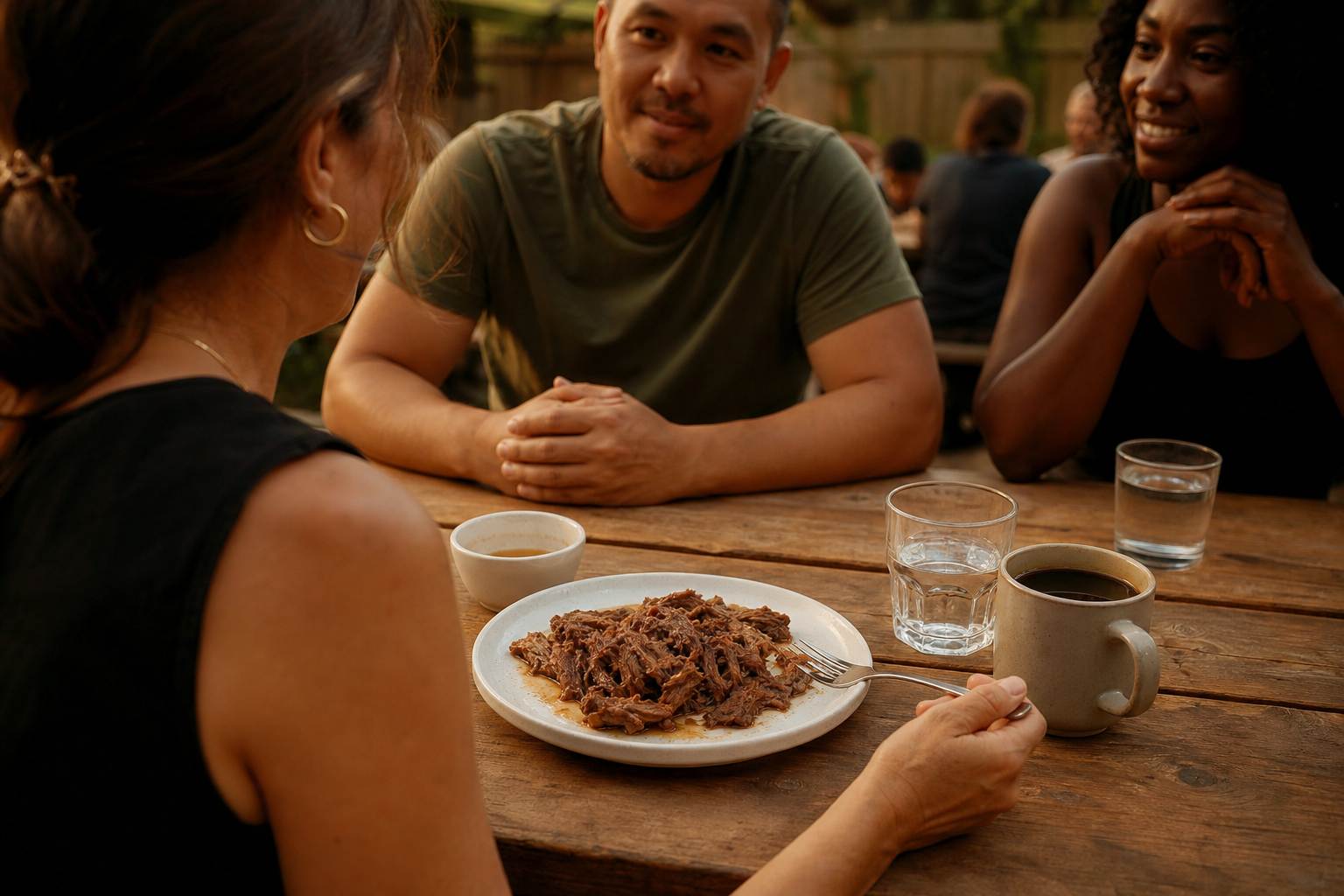
The slow cooker is the one kitchen appliance that asks nothing of you. You don’t need to marinate, babysit, or learn what “deglaze” means. You put in meat, add salt, close the lid, and walk away. Eight hours later, your house smells like you have your life together.
For carnivore eaters, that’s a great deal. Here’s how to get the most out of it, with five recipes that need almost no effort.
Why the Slow Cooker Works So Well for Carnivore
Carnivore cooking has a short ingredient list, and the slow cooker turns that into an advantage. Low, steady heat breaks down the tough, fatty, collagen-rich cuts that are usually the cheapest at the counter. A chuck roast that would chew like a hiking boot on the grill turns fork-tender after a long, gentle simmer.
It also makes batch cooking easy. One big pot gives you several meals, which fits neatly with a weekly prep routine. And since the meat cooks in its own fat and juices, nothing gets wasted. Those juices are basically free broth.
Pick the Right Cuts
Lean cuts and slow cookers don’t get along. Chicken breast and sirloin dry out and turn stringy. Go for cuts with fat and connective tissue:
- Beef: chuck roast, brisket, short ribs, shanks, oxtail
- Pork: shoulder (often sold as Boston butt), country-style ribs, hocks
- Lamb: shoulder, shanks, neck
- Chicken: bone-in thighs and drumsticks, skin on
- Other: beef cheeks, if your butcher has them (they’re wonderful)
Ask your butcher what’s on sale. The cuts that need long cooking are often the budget ones, so your wallet gets a break too.
The Basic Rules (There Are Only a Few)
Use very little liquid. Meat releases a lot of its own juice. A splash of water or bone broth is plenty, and sometimes you need none at all. Drowning the meat gives you boiled meat, not braised meat.
Salt generously. Salt is doing most of the seasoning work here. Add it before cooking, and taste the juices at the end. If you use other seasonings, check what you’re comfortable with on your own version of the diet.
Thaw first. Frozen meat in a slow cooker spends too long in the temperature range where bacteria thrive. Defrost in the fridge overnight.
Don’t lift the lid. Every peek lets heat escape and adds time. Resist.
Low and slow beats high and fast. Most tough roasts do best on low for 8 to 10 hours. High works in a pinch, but the texture is usually better on low. Cooking times vary by appliance and cut size, so go by tenderness. Poultry should reach 165°F (74°C) and pork a safe 145°F (63°C) or higher, though pulled pork cooks well beyond that.
Searing is optional. Browning the meat in a hot pan first adds flavor, and it’s worth it if you have ten extra minutes. If you don’t, nobody will arrest you.
Five Easy Slow Cooker Recipes
1. Beef chuck pot roast. Rub a 3 to 4 pound chuck roast with salt. Place it in the cooker with a half cup of water or bone broth, and a few tablespoons of tallow or butter on top if the roast is lean. Cook on low for 8 to 10 hours. Shred or slice, then spoon the juices over the top.
2. Pulled pork shoulder. Salt a bone-in pork shoulder, put it in fat side up, and add almost no liquid. Cook on low until it falls apart when poked with a fork, usually 8 to 10 hours. Pull it apart with two forks and stir the rendered fat back through. Crisp some of it in a skillet if you want crunchy edges.
3. Skin-on chicken thighs. Salt bone-in thighs and arrange them in a single layer if you can. Cook on low for about 4 to 6 hours until they’re very tender. The skin won’t be crisp, but you can fix that by sliding the thighs under the broiler for a few minutes before serving.
4. Short ribs. Salt and sear them if you’re feeling ambitious, then slow cook on low for 8 hours or so, until the meat pulls from the bone. Short ribs are rich, so a smaller portion goes a long way. Chill the juices, and the fat will rise and set so you can skim it off and save it for cooking later.
5. Lamb shoulder. Salt a bone-in lamb shoulder, add a splash of water, and cook on low for 8 to 10 hours. The result is soft, rich, and just gamey enough to feel like you’re eating somewhere nicer than your kitchen counter. If you’re new to lamb, our post on lamb, bison and venison covers what to expect.
Tracking What Comes Out of the Pot
Here’s the part that trips people up: slow cooker meals don’t have tidy nutrition labels. Fat renders out of the meat into the juices, and whether you eat that liquid or skim it changes your numbers. A fatty pork shoulder served with all its drippings looks quite different on paper from the same cut with the fat skimmed away.
A rough approach works fine. Weigh the cooked meat, note whether you ate the juices, and log accordingly. If you’re trying to hit specific protein and fat targets, the free Carnivore Macro Calculator can give you a daily starting point, so you know whether to pour on the drippings or hold back.
Storing and Reheating
Slow cooker meals are built for leftovers. Let the meat cool a bit, then refrigerate it in containers with some of its juices. The juices keep it moist when you reheat. It generally keeps in the fridge for a few days, and shredded meat freezes well in portions.
Reheat gently in a covered pan or in the microwave with a splash of broth. Chicken and pork should be heated until steaming hot all the way through.
Pot roast is also one of the few foods that tastes better the next day, which is more than most of us can say about ourselves on a Monday.
Common Mistakes to Avoid
- Too much liquid: you’ll get gray, watery meat.
- Overfilling the pot: keep it about half to two-thirds full so it cooks evenly.
- Using lean cuts: save the sirloin for the grill.
- Skipping the salt: slow cooking mutes flavor, so season boldly.
- Cooking too long: most meats are done when tender. Chicken especially can go from juicy to mushy if forgotten.
Start with the chuck roast. It’s forgiving and cheap, and it makes enough to cover your next few dinners. Once you’ve seen what a slow cooker can do with a little salt and a lot of patience, you may start eyeing the other cuts at the butcher counter. That’s how it starts.