Nobody warns you that going carnivore turns your grocery cart into a very short, very expensive sentence: ribeye, ribeye, ribeye. Then the receipt prints, and you consider whether the ancestral approach included a mortgage.
Good news: eating only animal foods doesn’t require buying only prestige cuts. Plenty of carnivore eaters run a lean grocery budget by shopping like their grandparents did, with less glamour and more chuck roast. Here’s how.
Why Carnivore Feels Expensive (and Where the Money Actually Goes)
Most of a carnivore grocery bill comes down to three things: choosing premium cuts by default, buying in tiny portions, and wasting food. That’s it. Your plate isn’t expensive because it’s meat. It’s expensive because you’ve been shopping the steakhouse menu at retail prices.
The shift in mindset is simple. You’re not paying for “steak.” You’re paying for protein and fat, and you can get those from many places. Once you start comparing options by how much food you get for your money rather than by how impressive it looks on the grill, the budget opens up.
It also helps to remember that you’re skipping a lot of the usual grocery categories. No snacks aisle, no cereal, no drinks with a cartoon on the label. That money can fund the meat.
Cheap Cuts That Do the Heavy Lifting
These are the workhorses of a budget carnivore kitchen:
- Ground beef. It’s usually among the most affordable options per pound, it cooks in minutes, and it’s hard to ruin. Fattier blends tend to be cheaper and more satisfying than ultra-lean ones.
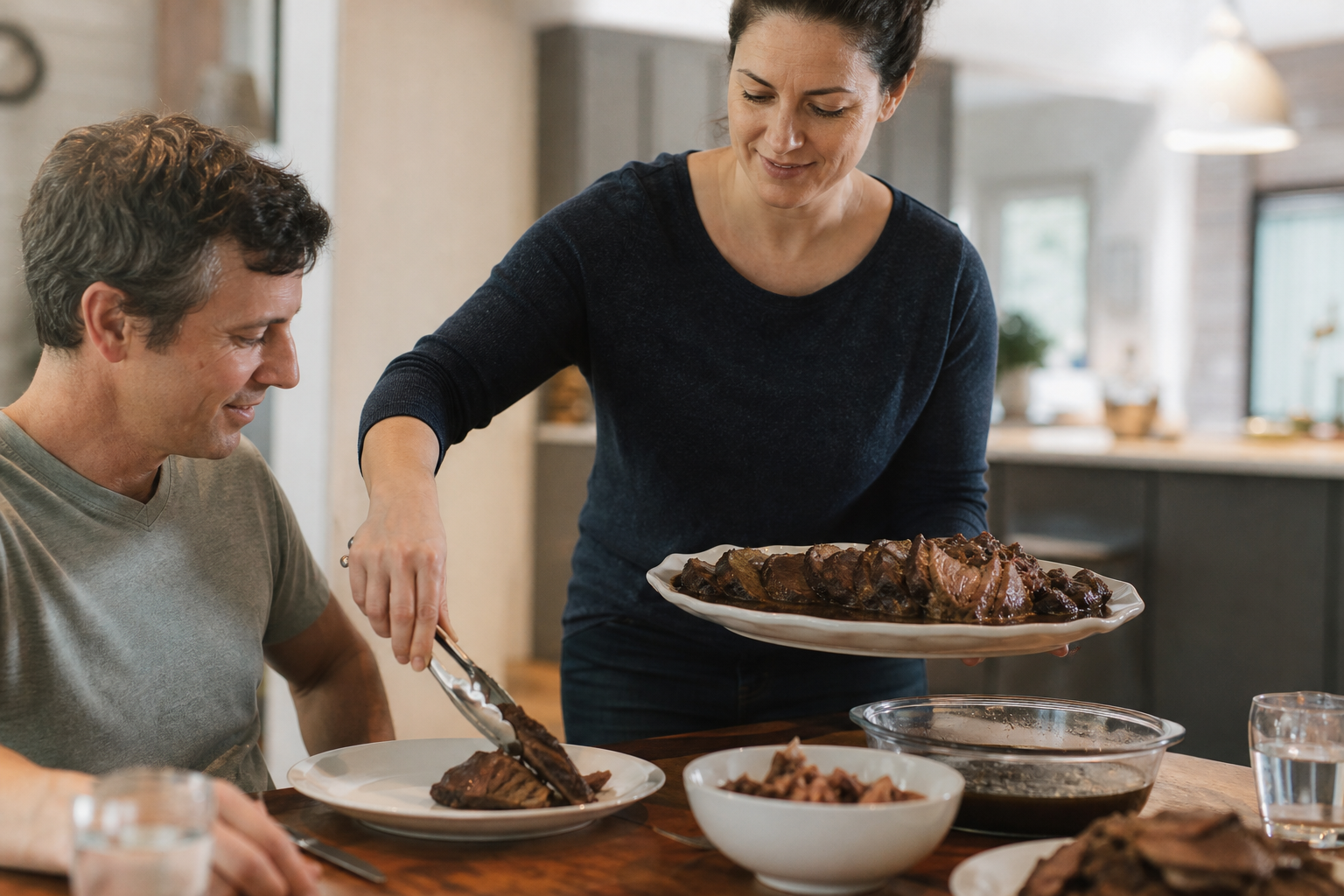
- Chuck roast and other tough cuts. Slow cooking turns these into something tender, and one roast can feed you for several meals.
- Pork shoulder (butt). A big, forgiving cut that shreds beautifully after a long, slow cook.
- Whole chickens. Often better value than packaged breasts, and you get the skin, the dark meat, and the carcass for broth.
- Chicken thighs, drumsticks, and wings. Cheaper than breasts and juicier, which matters when you’re relying on meat for flavor.
- Eggs. Many carnivore eaters include them, and they’re a low-effort way to fill in the gaps between meat meals.
- Liver and other organ meats. Often priced low at the butcher counter, if you can handle the flavor. A little liver mixed into ground beef is a classic way to ease in.
- Canned fish. Sardines, mackerel, and canned salmon are shelf-stable backups for the nights you can’t face the stove.
Notice what’s missing: anything with a famous name and a thick price tag. Save the ribeye for special occasions, or for when it goes on sale.
Fat Is Your Friend (and So Is Your Wallet)
Here’s a budget trick that comes built into the diet: fat is a major source of energy on carnivore, and fatty cuts are often cheaper than lean ones. Lean steaks command a premium. A fatty chuck roast or a chunk of pork belly gets you calories and satisfaction without the markup.
Also, stop throwing away the good stuff:
- Save your drippings. The fat left in the pan after cooking is free cooking fat. Strain it into a jar.
- Buy beef suet or tallow. Suet is often very cheap, and you can render it at home into tallow for frying and cooking.
- Keep the skin on. Crispy chicken skin is both a delicacy and a calorie source.
- Make broth. Bones from roasts and whole chickens simmer into a savory broth that costs nearly nothing extra.
Think of it as nose-to-tail eating for people who just want to save money and not look like a hipster butcher.
Buy Smart: Bulk, Butchers, and Markdown Stickers
How you buy matters as much as what you buy.
Go bigger. Family packs and bulk sections of ground beef are usually better value per pound than small trays. Portion and freeze what you won’t eat in a few days. Flat freezer bags stack neatly and thaw quickly.
Talk to a butcher. Local butchers often have trim, bones, suet, and less popular cuts that don’t make it into the supermarket case. Ask what’s affordable this week. Most of them enjoy being asked.
Hunt for markdowns. Many stores discount meat as it approaches its sell-by date. Buy it, cook it or freeze it the same day, and enjoy your small victory.
Consider a quarter or half cow. Buying directly from a farm or rancher can work out well if you have the freezer space and the upfront cash. Do the math for your area first, since prices and processing fees vary.
Compare by unit price. The little number on the shelf tag is the honest one. Package size and marketing language will happily mislead you.
Plan Before You Shop (Where the Calculator Comes In)
Waste is the sneaky budget killer. If you overbuy, meat spoils. If you underbuy, you end up grabbing an expensive emergency dinner. The fix is knowing roughly how much food you actually need.
That’s where the free Carnivore Macro Calculator earns its keep. Get your daily protein and fat targets, multiply by seven, and you have a weekly shopping goal instead of a guess. It’s much easier to buy the right amount of ground beef when you know what you’re aiming for.
A few planning habits help, too:
- Check the freezer first. Shop from what you have.
- Cook once, eat twice. A big roast on Sunday becomes lunch on Monday and Tuesday.
- Set a “default meal.” Ground beef patties and eggs, for example, so there’s always something easy that costs little.
- Track what you throw out. If the same item keeps ending up in the trash, stop buying it.
A Sample Budget Week
No prices here, since they vary wildly by region, but here’s the structure:
- Base: One or two large family packs of ground beef, plus a chuck roast or pork shoulder.
- Backup: A whole chicken or a few packs of thighs.
- Fillers: A couple of dozen eggs and a few cans of sardines or mackerel.
- Fat: Suet or tallow, plus whatever drippings you’ve saved.
- Treat: One nicer cut, if the budget allows, bought on sale.
Cook the roast early in the week, use the chicken carcass for broth, and keep ground beef as your fast option for busy nights. Repeat, adjust, and notice how little drama it takes.
A budget carnivore diet isn’t about deprivation. It’s about trading steakhouse pride for practical eating. Your wallet will notice, and the roast will taste just fine.