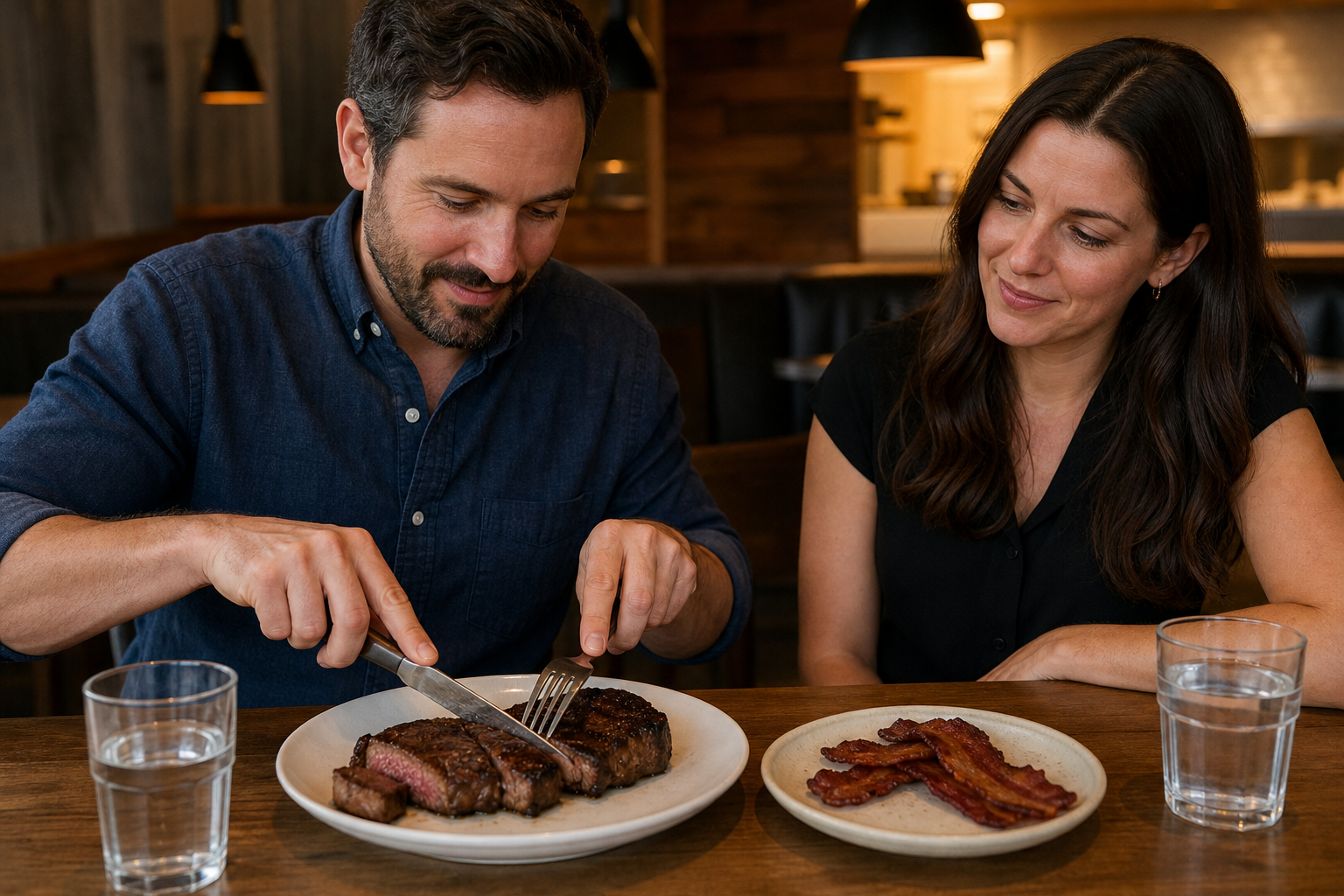
Eating at home on carnivore is easy. You buy meat, you cook meat, you eat meat. Restaurants are where the plan meets a menu that wants to put a “seasonal vegetable medley” next to everything, like an overeager friend who keeps introducing you to people.
The good news is that a restaurant is basically a place that sells cooked animals. You just have to know how to order them. Here’s how.
Scout the Menu Before You Leave the House
Five minutes of homework saves you from standing in a lobby, hungry, reading a pasta menu with growing despair.
Pull up the restaurant’s menu online and look for the obvious candidates: steak, burgers, grilled fish, roast chicken, ribs, lamb chops, eggs. Most places have at least two or three. If the menu is all noodles and salads, pick another place now, while you still have your dignity and a car.
If you’re going with a group, offer to choose the venue. “I know a great steakhouse” has never started an argument.
Best Orders by Restaurant Type
Almost every cuisine hides something workable if you know where to look.
- Steakhouse: The easy mode. Ribeye, New York strip, or filet, with a side of extra butter if you want more fat. Ribeye and strip tend to bring more fat than filet, which matters if you’re eating to a fat target.
- Burger joint: Order the patty (or two) with cheese and bacon if you eat dairy, and skip the bun. Many places will serve it “protein style” on a plate. Ask them to cook it in butter or on the grill rather than with a seasoning blend you can’t identify.
- BBQ spot: Brisket, ribs, pulled pork, and smoked chicken are often great. Ask for the sauce on the side, or skip it, since sauces are usually where the sugar lives. Check the rub if you’re strict.
- Diner or breakfast place: Eggs, bacon, sausage (check for fillers), and a burger patty. Breakfast is the most carnivore-friendly meal in America, a fact that should be on a flag somewhere.
- Mexican: Carne asada or fajita meat without tortillas, peppers, and onions. Ask for extra meat in place of the rice and beans.
- Wing place: Plain wings, naked, with no breading, which means “grilled” or “smoked” rather than “crispy.” Sauce is optional and usually sugary.
- Sushi or seafood: Sashimi, grilled salmon, seared scallops, oysters. Fish counts, and so does the pleasure of eating something expensive that someone else cleaned.
How to Order Without Being That Person
You don’t need to give a TED talk about your diet. The server has forty other tables and a limited emotional bandwidth for your macros.
Keep it short and specific. A few scripts that work:
- “I’ll have the ribeye, cooked medium, with just salt and pepper. No sides, but could I get extra butter?”
- “Can I get the burger with no bun, no sauce, and no toppings? Just the patty with cheese.”
- “Could you do the salmon grilled with butter instead of the glaze?”
Notice what these have in common: they say what you want rather than reciting everything you can’t have. Servers handle “no bun” a hundred times a night. A lecture on the ancestral human diet gets a polite nod and a mild eye twitch.
Two more tips. Ordering a double portion of the protein in place of the sides often costs less than you’d expect and fills the plate nicely. And if you’re tracking, restaurant steaks tend to run larger than you’d portion at home, so it’s worth knowing what your daily targets are. The free Carnivore Macro Calculator can give you a baseline to compare against, so you’re not guessing whether that 16-ounce cut fits your day.
Watch for the Sneaky Stuff
Even a plain-looking piece of meat can arrive with some uninvited guests. A few things to look out for:
- Marinades and glazes. Teriyaki, honey garlic, and “house glaze” are sugar in disguise. Ask for the meat plain.
- Seasoning blends. Most steakhouses use salt, pepper, and maybe garlic. Some use blends with sugar or other additives. If you’re strict, ask. If you’re relaxed about it, decide ahead of time where your line is.
- Cooking fats. Many kitchens finish steaks with butter, which is great. Some use vegetable oil blends. If it matters to you, ask what they cook with, and request butter instead.
- Breading and batter. Fried chicken, fish and chips, and chicken-fried anything come wrapped in flour. Grilled or baked is the safe route.
- Sausages and meatballs. These often contain breadcrumbs or other fillers. Ask, or pick whole cuts instead.
If you have a food allergy, tell your server clearly and separately from your diet preferences. A preference gets a shrug at worst, but an allergy needs the kitchen’s full attention.
Fast Food and Travel Backup Plans
Sometimes the options are a gas station, an airport, or a drive-through at 9 p.m. It happens, and it’s fine.
At a fast food chain, burger patties with no bun are the standard fix. Grilled chicken pieces, bacon, and plain eggs at breakfast also work at many places. Order several patties and eat them with a fork, like a civilized person.
For travel, pack a few shelf-stable standbys: jerky (check the sugar), meat sticks, canned fish, or hard-boiled eggs if you’re driving. At an airport, look for a breakfast sandwich you can dismantle. Eat the egg, sausage, and cheese, and leave the bread behind like a souvenir you didn’t want.
Don’t Let the Perfect Beat the Good
You may not hit a perfectly pure plate every time you eat out, and that’s okay. If a restaurant’s steak was cooked in something questionable, or there was a dusting of seasoning you didn’t audit, one meal is not the end of anything. Consistency over weeks matters more than perfection at one dinner.
Eating out also doesn’t have to be a stressful puzzle. Pick the place, look at the menu, order a simple steak or burger or piece of fish, and enjoy the conversation. Pass on the bread basket, and the rest of the evening takes care of itself.