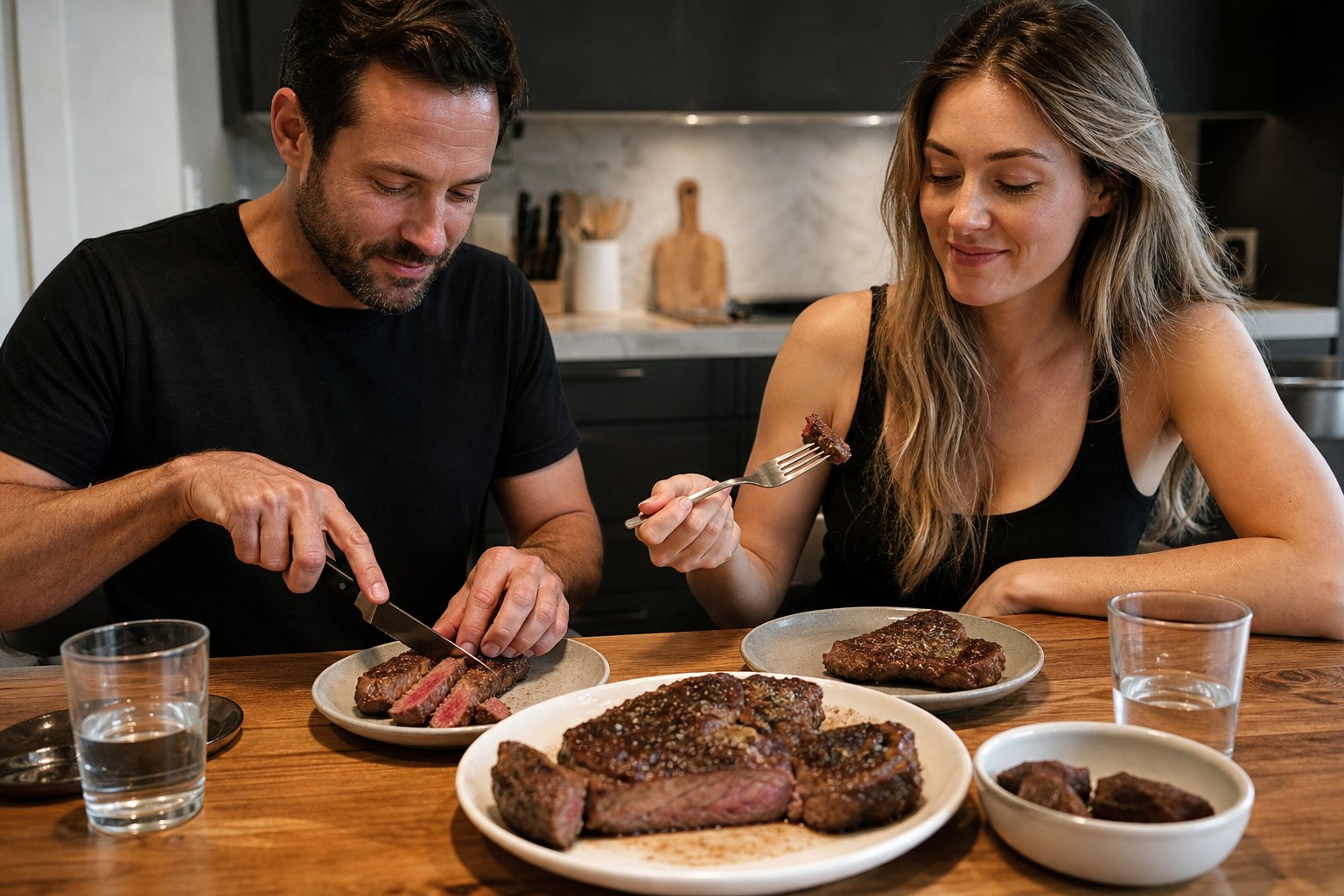
You committed. You cleared the fridge of everything that grows in dirt. You bought a ribeye with the confidence of a medieval knight. Then, around day three, you feel like a sock that went through the dryer with a brick.
Welcome to what the carnivore community calls “carnivore flu.” It’s not an official medical term, and it’s not actually the flu. But the nickname stuck because the experience, as many people describe it, is familiar: tired, foggy, headachy, a bit cranky, and wondering if this was a terrible idea. Here’s what’s going on, what people do about it, and when to stop toughing it out.
What People Mean by “Carnivore Flu”
The phrase is borrowed from the “keto flu,” and the overlap makes sense. Both diets cut carbohydrates sharply, and both come with a similar list of early complaints that people report:
- Low energy or sluggish workouts
- Headaches
- Brain fog
- Irritability
- Strong cravings for bread, sugar, or anything in a crinkly bag
- Digestive changes, which can go in either direction
- Trouble sleeping
Not everyone gets it. Some people sail through with nothing but a smug grin and a full plate. Others feel off for a few days, and some for a couple of weeks. Reports vary widely, and nobody can promise you a timeline.
Why the First Week Can Feel Rough
Nobody fully knows why some people feel worse than others, but there are some reasonable explanations that come up again and again.
Your fuel mix changed overnight. You went from a diet built around carbs to one built around protein and fat. Your body is adjusting to the new setup, and adjustment is rarely graceful.
Water and salt may be shifting. Many people report that cutting carbs makes them need more salt and fluids than before. Processed foods are often salty, and when they leave your diet, your sodium intake can quietly drop. A lot of the advice you’ll see for headaches and fatigue in week one comes back to this.
You might simply be eating too little. This one is underrated. Meat is filling, so some new carnivores end up undereating without noticing. Feeling tired and grumpy on 1,200 calories is not a mysterious condition. It’s a Tuesday.
Habits and caffeine. If your old routine included a giant sweet coffee at 3 p.m., your afternoon is going to feel different. Withdrawal from a habit can feel like withdrawal from a food.
None of this is a diagnosis. It’s the list of usual suspects, and it’s worth thinking through before you decide that carnivore “doesn’t work for you.”
The Boring Fixes That Get Mentioned Most
Nobody wants a rocket-science answer, and fortunately there isn’t one. These are the practical steps most carnivore dieters swear by:
Salt your food properly. Season your steaks like you mean it. Plenty of people find that adding salt more generously than they used to helps them feel better in the early days. If you have a medical condition like high blood pressure or kidney issues, talk to your doctor before changing your sodium intake.
Drink water. Sip throughout the day instead of chugging a liter at once and then living in the bathroom.
Try broth. A warm mug of bone broth is hydrating, salty, and feels like a hug from a very meaty grandmother. Check that the one you buy doesn’t contain vegetable ingredients if you’re being strict.
Get your sleep. Early adaptation plus bad sleep is a recipe for hating everything. Protect your bedtime like it’s the last slice of bacon.
Go easy on workouts. A week of lighter movement, such as walking, mobility work, or easy lifting, is better than testing your max when you’re running on fumes.
Eat Enough, and Know Your Numbers
Appetite signals can be strange during the switch. Some people are ravenous, and others forget lunch exists. If you feel awful, one of the simplest things to check is whether you’re actually eating enough.
That’s where a little tracking helps, even if you plan to ditch it later. Plug your age, height, weight, and goals into the free Carnivore Macro Calculator to get a ballpark for daily protein, fat, and calories. Then compare that to what’s really landing on your plate. If you’re at half the target and wondering why you feel like a deflated pool toy, you’ve found a clue.
A few meal tips for the transition:
- Include fattier cuts, such as ribeye, ground beef, or chuck, rather than only very lean meat. Fat is a big part of how this way of eating provides energy.
- Eat when you’re hungry, and don’t white-knuckle through it to prove something.
- Keep it simple. Now is not the time to launch a seventeen-ingredient charcuterie experiment.
Ease In or Jump In?
Both approaches have fans.
Cold turkey (cold beef?) appeals to people who want a clean break. You rip off the band-aid, and the adjustment period is condensed.
Gradual transition appeals to people who would rather keep functioning at work. You might cut out sugar and grains first, then vegetables, then whatever else is left over, building meals around meat as you go. It’s slower, but it can feel gentler.
Neither one is morally superior. Pick the one you’re likelier to stick with, because a plan you abandon on day four helps no one.
When to Stop Toughing It Out
Here’s the unglamorous but important part. “It’s just adaptation” can be a convenient story, and not every symptom deserves to be waved off. If you feel truly unwell, if symptoms are severe, if they drag on instead of easing, or if you have a health condition or take medication, talk with a doctor or registered dietitian. This is especially true if you have diabetes, blood pressure issues, kidney problems, or you’re pregnant or breastfeeding. A big dietary change can interact with all of those, and a professional can help you do it safely.
A rough first week doesn’t make you weak, and it doesn’t prove the diet is flawed. It’s a transition, and for many people the best tools for getting through it are plain ones: enough salt, enough water, enough food, enough sleep, and a little patience.
So go salt that steak. Your future self, the one who isn’t staring blankly at the fridge, will thank you.